Choosing the right radiator means balancing how much heat a room needs with the look that suits the space and the money you have to spend. Get these three elements right and the result is a warmer home that feels comfortable without wasting energy or clashing with the décor.
Many homeowners start by looking at trusted manufacturers such as Stelrad when they want reliable performance across different styles and heat outputs. The key is to work out the practical requirements of each room first, then select a design that fits both the space and the overall budget.
Working Out the Heat Output You Need
Every room loses heat at a different rate depending on windows, walls, ceiling height and insulation. Radiator output is measured in British Thermal Units (BTUs), showing how much heat it delivers each hour.
Measure the room and adjust for heat-loss features, or use an online calculator. Many prefer a qualified installer to calculate accurately. This avoids radiators that are too small or unnecessarily large.
Panel radiators are labelled by type: Type 11 or K1 (single panel), Type 22 or K2 (double), and Type 33 or K3 (triple). More panels and fins mean higher output. Vertical and column styles vary in configuration too.
Matching Style to the Room
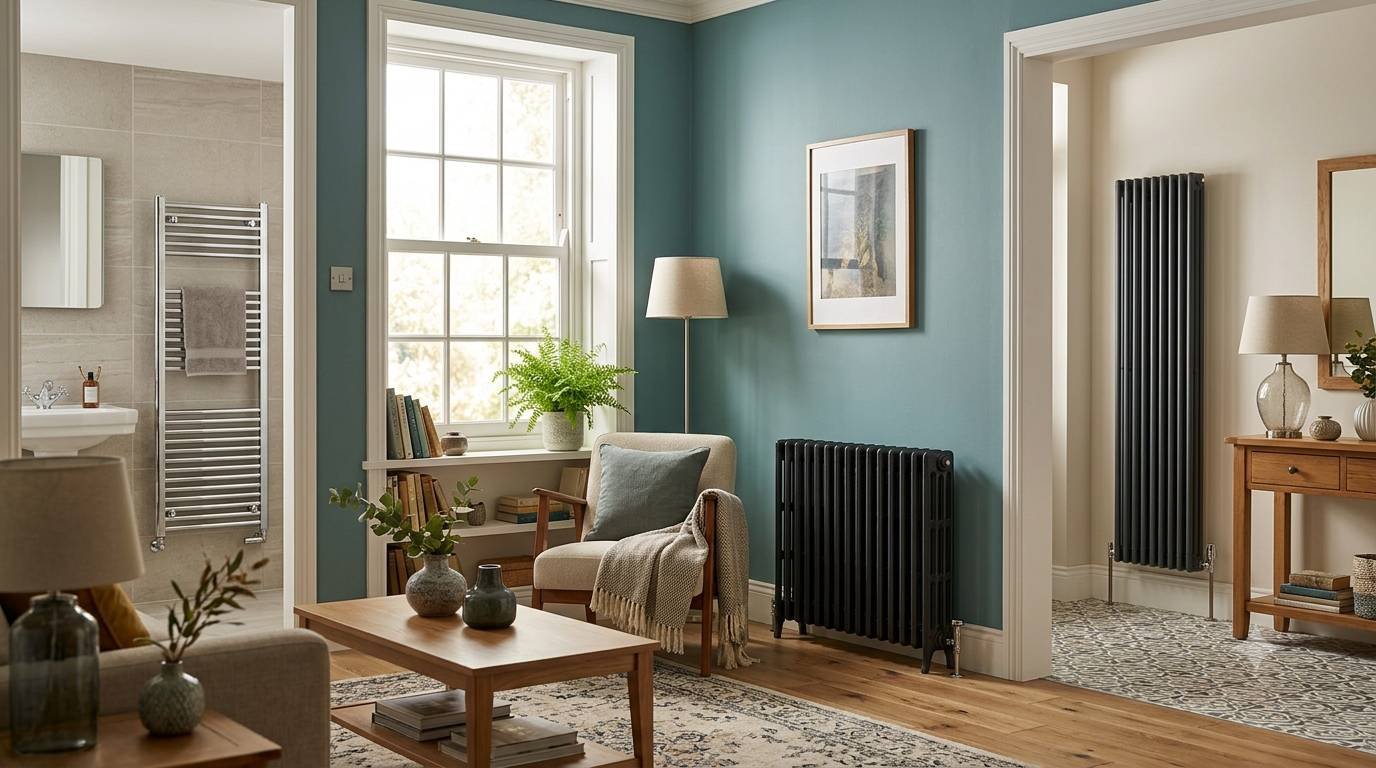
Style affects placement and how the radiator works with furniture. Horizontal panel radiators suit living rooms and bedrooms, sitting neatly under windows. Flat-fronted versions look modern; lined models add subtle detail. Column radiators fit period homes and hallways with their classic vertical tubes.
Bathrooms need moisture-resistant towel radiators that warm the room and dry towels. Straight or curved bars, in white, chrome or anthracite, match most fittings.
Vertical radiators save space in narrow rooms, kitchens or beside doors. Designer panels or tubular forms can become a feature. White is the most versatile and affordable colour; anthracite and other shades help blend or stand out.
Balancing Output, Style and Budget
Budget affects every part of the decision. Basic panel radiators offer solid performance at the lowest price and suit most everyday rooms. Higher-output models or designer finishes cost more but can reduce the number of radiators needed or improve the overall look of the space.
Consider these practical steps when weighing the options:
- Calculate the exact BTU requirement for each room before looking at styles.
- Decide whether the radiator will be the main heat source or a secondary one.
- Check the available wall space and preferred orientation (horizontal or vertical).
- Compare the running costs of different outputs rather than focusing only on the purchase price.
- Factor in installation, valves and any necessary pipework changes.
- Look at the length of the manufacturer’s guarantee as a measure of expected durability.
It is worth remembering that a slightly more expensive radiator with the correct output can prove more economical over time than a cheaper model that struggles to heat the room. Energy-efficient designs that work well with modern boilers or heat pumps can also help keep long-term costs down.
Practical Installation Points and Common Pitfalls
Radiators work best with free air circulation—keep furniture and curtains clear. In bathrooms, site electrical models safely away from water.
Most modern radiators offer side or bottom connections for flexible pipe runs. Older systems may need adapters; an installer can advise.
Common mistakes include choosing style over output, or ignoring low-temperature needs with heat pumps. Seek professional advice for high ceilings, open-plan spaces or older solid walls to confirm heat-loss figures and the best combination of size, type and style.
Conclusion
Matching style, output and budget starts with understanding the heat needs of each room and then selecting a radiator that meets those needs without compromising the look of the space. Panel, column, vertical and towel designs all have clear strengths, and the right choice depends on room size, wall space and personal preference.
Take time to calculate the required output accurately, compare options within your budget and involve a qualified installer when the system is complex or the property has special requirements. Doing so leads to a heating solution that works reliably, looks appropriate and makes efficient use of energy.